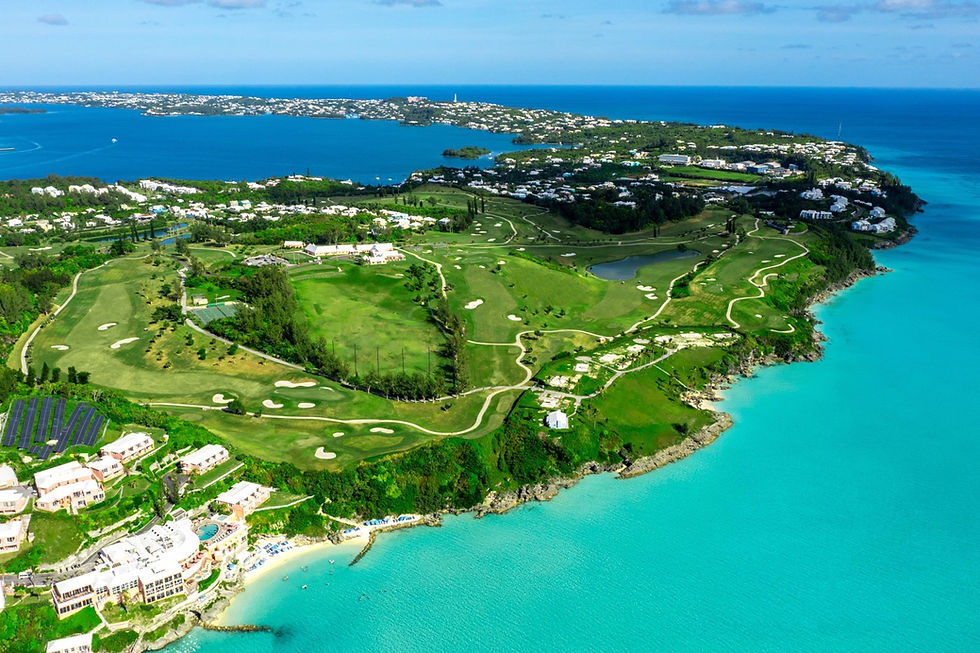
2025 Cognizant Classic Course Preview

Updated: Oct 15
The Cognizant Classic opens one of my favorite stretches of golf on the PGA Tour, the Florida swing, known for its firm and grainy Bermuda greens, copious water hazards, and swirling winds. Yet for reasons unbeknownst to myself, the PGA Tour has attempted to re-brand the previous Honda Classic as another 15- to 20-under-par approach and putting contest. In a sign of solidarity, for the ethos of the Honda Classic, we will quietly support the Honda of old while not standing for the Woke Cognizant. I can’t say I blame Justin Thomas or Rory McIlroy for passing on the liberal efforts of the Cognizant to test the modern professional golfer. Instead, Russell Henley, Sepp Straka, Sungjae Im, Shane Lowry, Daniel Berger, and Jordan Spieth, among others, will headline the field.
Former Winners
2024: Austin Eckroat (-17) over Min Woo Lee, Erik Van Rooyen (-14)
Winner Odds: Eckroat (130/1)
Scoring Average: -1.09
2023: Chris Kirk (-14) over Eric Cole (-14) (Playoff)
Winner Odds: Kirk (30/1)
Scoring Average: +0.21
2022: Sepp Straka (-10) over Shane Lowry (-9)
Winner Odds: Straka (135/1)
Scoring Average: +1.3
2021: Matt Jones (-12) over Brandon Hagy (-7)
Winner Odds: Jones (75/1)
Scoring Average: +1.11
2020: Sungjae Im (-6) over Mackenzie Hughes (-5)
Winner Odds: Im (30/1)
Scoring Average: +1.82
The Basics
Course: PGA National (Champion)
Designer: Tom and George Fazio (1981), with a Jack Nicklaus renovation in 2002, 2014 and 2018
Location: Palm Beach Gardens, Florida
Par Length: Par 71 (7,167 yards)
Fairways: Perennial Rye-grass overseed, measuring 28 yards wide
Rough: Perennial Rye-grass overseed
Greens: TifEagle Bermuda-grass measuring 7,000 feet on average and running 12 on the stimp
Hazards: Water comes into play on 15 holes
*Note: Fairways and tees have been over-seeded for the first time since 2014. In previous years, only the rough was over-seeded
The Golf Course
Ah, the BEAR TRAP. PGA National has the rare honor of featuring not one, not two, but three of the most damaging architects to the advancement of strategic design in golf history: George Fazio, Tom Fazio, and Jack Nicklaus. All three are responsible for the dark period of penal architecture during the late 20th century. George and Tom Fazio originally laid out the course in 1981, but Nicklaus has been brought in on several occasions to make some notable changes. Most recently, in 2018, Nicklaus expanded the green complexes and re-seeded them with a stronger strain of Bermuda, making the greens more true but also more firm. 99% of the time, renovations are in place to make golf courses longer and more challenging for professional golfers, yet Nicklaus actually shortened the golf course in 2018, because PGA National was already so difficult.
As is the case with most Florida courses, PGA National is on an incredibly flat piece of property, and its defining characteristics are its hazards. The Nicklaus/Fazio design features 26 individual water hazards, and water comes significantly into play on 15 out of 18 holes. This is an example of penal architecture in its truest sense. There is no real strategy or shot options to this course. The architect is asking players to simply hit it here, and if players hit it anywhere else, they will likely be taking a penalty stroke. Many think that water actually creates more interesting golf, but when a course features this many hazards, it actually encourages a completely homogenized strategy. Players do not have much of a choice on many holes other than to club down off the tee and hit the ball in the same spot, taking their medicine and avoiding penalty strokes at all costs.
Due to the sheer amount of water in play, firm greens, and the potential for wind, PGA National has historically played as one of the hardest courses on the PGA Tour. Eight out of the last 10 years, it has played as a top-10 course in difficulty on the PGA Tour. Yet those days of the Honda are gone. For inexplicable reasons, the Cognizant changed its 10th hole from a par four to a par five, which resulted in the easiest scoring average in tournament history. From 2020 to 2023, the tournament scoring average had been between +0.21 and +1.82, depending on the softness of the turf and the wind. Last year, we saw an uncharacteristically soft golf course post-El Niño, and even if the 10th played as a par four, the golf course would have still played -0.09 strokes under par. While the golf course should be firmer this year, long gone are the days of the Cognizant playing over par. Under its current par, length, and turf conditions, the Cognizant is no more than another mid-scoring test on the PGA Tour. Last year, it played right around middle of the pack in scoring difficulty. The par threes are still treacherous, ranking as the sixth-most difficult par threes on the PGA TOUR, yet an additional par 5, that essentially played closer to a par 4 than a par 5, makes a massive impact on scoring.
Of course, wind/turf conditions will really affect the scoring at PGA National. Last year, we only got one windy day (Friday) where the golf course played over par, and the golf course was far softer than usual due to El Niño. This year, the golf course should be a little firmer, but we can still expect significant rain on Monday, and even a little bit more on Tuesday. Be sure to check on weather updates throughout the week in the Discord, as we will have wall to wall BOOTS coverage via the great Rishi. Yet where it stands now, I would expect similar conditions to last year. Once again, Friday will be the windiest day, so there may be a wave advantage for us to consider, but the wind dies down over the weekend. Maybe it plays a touch harder than last year, but I’m still expecting a -1 scoring average.
At the end of the day, the name of the game at PGA National is middle-iron approach play and putting. It’s one of the least driver-heavy golf courses on Tour, and the optimal strategy is picking your most comfortable club choice off the tee, avoiding the big miss, and letting your middle irons and putter go to work. With a greens-in-regulation percentage nearing 70%, and easy green-side surrounds, short game continues (and driving) to be devalued here in exchange for approach play and putting, which make up for +7.3 of the strokes gained of top-5 finishes, compared to +2 for short game and putter. While approach play and putting always makes up more of the strokes gained pie, this week the pair makes up 78% of the breakdown, and my model will reflect this.
Stats
Off the Tee
Driving distance at PGA National last year was just 280.3 yards, 12 yards below Tour average, with a driving accuracy percentage of 64.9%, 12 yards above Tour average, which speaks to the positional nature of this golf course. Last year, it featured a driver usage percentage of 53% compared to the Tour average of 67.3%. In a stark departure last week from Vidanta Vallarta, PGA National is one of the least driver-intensive golf courses on the PGA Tour, and the optimal to simply avoid the trouble off the tee, as this event is won with approach play and putting.
Last year, PGA National ranked 14th out of 43 courses in SG: OTT difficulty. It ranked 40th out of 43 courses in missed fairway penalty, 39th in rough penalty, and 40th in non-rough penalty, and really just 13th out of 43 courses in fraction of penalty strokes resulting from water. The challenge off the tee at PGA National is overrated, and water tends to come into play on approach more often than it does off the tee. The over-seeded rough is an absolute joke at PGA National, and the only real concern is the big miss. You don’t need to be a particularly elite driver to succeed at PGA National, and the copious water hazards and pinch points of fairways take driver out of player’s hands. It has not typically been a golf course that can be bomb and gauged, despite the low rough penalty. Each of the last three years, it has featured a below-average correlation with distance, and while accuracy is generally more correlated with success than distance, it is not a golf course where one needs to be hyper-accurate either. Most will club down off the tee to set up their second shot as opposed to attempting to yield a significant advantage with their driver.
Ultimately, I am looking at a Tour average mix of those who are driving the ball well RIGHT NOW, as this is a pick your poison type of week OTT, good drive percentage (I don’t need you to be hyper accurate, I just want you to put yourself in position to hit the most greens in regulation), and strokes gained off the tee on less-than-driver courses.
Approach
Last year, PGA National ranked 12th out of 43 courses in SG: APP, and while it is trending in the easier direction, it has always been one of the most challenging approach courses on Tour
There's an interesting dichotomy to consider as well. Six of the last 10 years, PGA National has ranked inside the top three in approach difficulty from greater than 150 yards, but every single year, it consistently ranks significantly easier in approach difficulty from inside 150 yards. Translation: approach play from 150 yards-plus is incredibly challenging at PGA National, due to the amount of water guarding the greens, particularly on the par threes. The water does not feel as intimidating to pros with a wedge, but longer irons create a wider dispersion pattern. Despite this course only playing a touch over 7,000 yards, nearly two thirds of all approach shots come from greater than 150 yards, and skill with middle to long irons at PGA National remain the single most important key to success this week. The best long-term middle-iron approach players in this field are Victor Perez, Kurt Kitayama, Joel Dahmen, Rico Hoey, and Charley Hoffman.
Proximity
Distance | Shot Frequency | Tour Average |
Inside 100 Yards | 5.2% | 9.0% |
100-125 Yards | 10.0% | 10.3% |
125-150 Yards | 18.2% | 17.0% |
150-175 Yards | 21.0% | 22% |
175-200 Yards | 23.7% | 17.5% |
200 Yards-Plus | 21.9% | 25.9% |
Around the Green
Last year, PGA National ranked 31st out of 43 courses in strokes gained around the green difficulty, and compared to driving, approach play, and even putting, around-the-green play has historically been the easiest aspect of PGA National and the least correlated with success compared to other categories by a healthy margin. The easier Cognizant will only continue this trend in spades with over-seeded fairways and a higher greens-in-regulation percentage.
Last year, it ranked 18th out of 45 courses in around the green difficulty from the fairways (expect this to get even easier with over-seeded fairways this year), 43rd from the rough, and 41st from the bunkers. Last year, Austin Eckroat, Erik Van Rooyen, Shane Lowry, Jake Knapp, and David Skinns all finished top-eight losing strokes around the green. Among top-five finishers, around-the-green play hasn’t even made up 2% of the total pie. Short game skill just objectively does not matter at PGA National, and I don’t know why we don’t see Viktor Hovland here more often!
Putting
The real challenge of PGA National is ball-striking due to the obvious nature of the hazards. The test becomes far easier once players get on and around the greens. Yes, PGA National features firm, fast, and grainy Bermuda greens, but last year, it ranked 36th out of 45 courses in strokes gained putting difficulty. Neither Tom or George Fazio are remotely talented at creating interesting green contours, and they really threw in the towel on this one. PGA National features some of the flattest greens on Tours, and the putting metrics reflect this. Last year, PGA National ranked 26th in putting inside five feet, 32nd from five to 15 feet, and 21st from greater than 15 feet. The only challenging aspect of the greens at PGA National are the speed and the grain. Those who are experienced at putting on grainy Bermuda will observe a distinctive advantage. Over the past three years, the best pure Bermuda-grass putters in this field have been Taylor Montgomery, Beau Hossler, Andrew Putnam, Harry Hall, and Ben Griffin.
As the greens-in-regulation percentage has increased over the past two years, the ability to separate via elite putting and the overall importance of putting has increased. Last year, every single player in the tope ight gained over a stroke putting, and putting has played even a greater role than approach play in the strokes gained breakdown among top finishers and winners. This may not have been the case at the Honda Classic, but the Cognizant Classic is an approach and putting golf course.
Scoring Stats
First, I wanted to identify those who play their best golf in Florida. It is not breaking news that a great majority of the PGA Tour lives in the greater Palm Beach/Jupiter area, and many of the players in this field are not only used to practicing with this agronomy, they will also be sleeping in their own bed. Over the past five years, the best players in this field in Florida have been Shane Lowry, Sungjae Im, Daniel Berger, Chris Kirk, and Russell Henley.
Finally, I've alluded often to the water-heavy nature of PGA National. Just like classical, Golden Age (Riviera, Winged Foot), and TPC (TPC Scottsdale, TPC Summerlin) are both styles of architecture, "Water Heavy, Penal" is also a style of architecture, where the defining character of the course is its hazards. Sepp Straka, 2022 champion, defined this type of architecture aptly. "It’s right there in front of you. I mean you basically try not to hit it in the water. You just pick your safe targets and you hit an aggressive shot at your safe targets and that’s kind of the key." The best players in this field on water-heavy courses over the past three years have been Sungjae Im, Shane Lowry, Daniel Berger, Russell Henley, and Cameron Young.
Comp Courses/Comp Course History
PGA National ranks firmly in the middle of the pack in course history. Austin Eckroat won here last year with just a missed cut in his only prior appearance, but Jake Knapp and C.T. Pan were the only two true debutants in the top 15. The prior year, Eric Cole and Ryan both finished top-four on debut. The reason why I will never rate course history above average here is the same reason I am lower on course history than most at TPC Sawgrass. Water hazards greatly diminish strategy, and PGA National features some of the most banal green complexes on Tour. Any golf course with this amount of water hazards is going to be filled with variance, and even if a player has had success at PGA National in the past, they will still need to show up and execute. Still, elite middle-iron players and those who are comfortable on Bermuda (Berger, Straka, Lowry, Henley) will always possess a distinct advantage at PGA National, although I would not be overly consumed with course history from prior to the past two years. Still, the best players at PGA National have been Sepp Straka, Daniel Berger, Shane Lowry, Byeong-Hun An, and Rickie Fowler.
In terms of comp courses, the three that I would specifically highlight are TPC Sawgrass, TPC Twin Cities, and TPC Southwind. TPC Southwind and TPC Southwind are both water-heavy, less-than-driver, middle-iron-intensive, mid-scoring affairs. While TPC Twin Cities is not Bermuda-grass, it features incredibly similar architecture to PGA National, with water as the defining character trait of the golf course. The best players in this field at the comp courses have been Daniel Berger, Sungjae Im, Brian Harman, Doug Ghim, and Brice Garnett.
Model
Off the Tee (18%) (PGA Tour Average: 18%)
L36 Recent Strokes Gained Off the Tee (7%)
L50 Good Drive Percentage (5%)
L2 Years Strokes Gained Off the Tee: Less than Driver Courses (6%)
Approach (33%) (PGA Tour average: 28%)
L36 Recent Strokes Gained Approach (16%)
L75 Proximity 125-150 yards (5%)
L75 Proximity 150-200 (12%)
Around the Green (5%) (PGA Tour average: 10%)
L50 Strokes Gained Around the Green
Putting (18%) (PGA Tour average: 15%)
L3 Years Strokes Gained Putting: Bermuda-grass (8%)
L50 Putting 5-10 Feet (5%)
L50 Putting 10-15 Feet (5%)
Scoring Stats (10%) (PGA Tour average: 14%)
L3 Years Strokes Gained Tee to Green: Water-Heavy Courses (5%)
L5 Years Strokes Gained Total: Florida
Comp Courses/Course History (16%) (PGA Tour average: 15%)
L24 PGA National (7%)
L36 Comp Courses (TPC Sawgrass, TPC Southwind, TPC Twin Cities) (9%)
Model Top 20
Kurt Kitayama
Daniel Berger
Russell Henley
Sepp Straka
Adam Svensson
Sungjae Im
Lucas Glover
Jhonattan Vegas
Shane Lowry
Lee Hodges
Brian Harman
Ben Griffin
Doug Ghim
Billy Horschel
Keith Mitchell
Joel Dahmen
Denny McCarthy
Taylor Pendrith
Eric Cole
Brice Garnett
Player Profile: Lee Hodges
Daniel Berger or Russell Henley would be the easy choice here, and both possess the highest likelihood to win the event in my humble opinion. Yet let’s go off the board and provide a sleeper with the legitimate potential to win this tournament in a runaway. In Lee Hodges’ case, we have already seen him do this on an incredibly similar golf course when he won the 3M Open by five strokes. Yes, TPC Twin Cities is one of my favorite comp courses this week, as it is another water-heavy golf course that accentuates a combination of elite middle-iron play and putting while requiring players to simply avoid the landmines off the tee, in exchange for a de-valuation of short game skill. This type of golf course plays right into the hands of Hodges, who is an incredibly accurate driver of the ball, a great middle-iron player, a solid putter, and his only notable weakness is around-the-green play. Outside of his success at TPC Twin Cities, Hodges has also recorded a ninth and a 14th in two appearances at PGA National, and he has made the cut in all five starts this year, with top-10 finishes at the Sony Open and Farmer’s Insurance Open. We have been riding Hodges to considerable success all season, and it’s finally time to push all the chips in.
Keep reading: 2025 Final Thoughts | 2026 preview