
2025 Valspar Championship Course Preview

The PGA Tour heads to Tampa this week for the final stop in a four-week Florida swing. While I don't think that the Valspar Championship is the best Florida event, it might be the most underrated. The field strength has been up and down over the years amid multiple scheduling changes. While most of the best players in the world are now in full-on Masters mode, we'll still get one more look at Xander Schauffele, Justin Thomas, Jordan Spieth, Tommy Fleetwood, Sam Burns, Shane Lowry, Viktor Hovland, and Daniel Berger, among others, before Augusta. The Copperhead Course at Innisbrook has very little in common with Augusta National stylistically or agronomically, yet the Larry Packard design demands precision long-iron play and features a low greens-in-regulation percentage.

Former Winners
2024: Peter Malnati (-12) over Cameron Young (-10)
Winner Odds: Malnati (330/1)
Scoring Average: +0.39
2023: Taylor Moore (-10) over Adam Schenk (-9)
Winner Odds: Moore (53/1)
Scoring Average: +0.92
2022: Sam Burns (-17) over Davis Riley (-17) (Playoff)
Winner Odds: Burns (21/1)
Scoring Average: -0.76
2021: Sam Burns (-17) over Keegan Bradley (-14)
Winner Odds: Burns (70/1)
Scoring Average: -0.06
2019: Paul Casey (-8) over Louis Oosthuizen (-7)
Winner Odds: Casey (22/1)
Scoring Average: +0.91
The Basics
Course: Innisbrook (Copperhead)
Designer: Larry Packard (1971)
Location: Palm Harbor, Florida
Par/Yardage: Par 71 (7,352 yards)
Fairways: Rye-grass over-seed, measuring 27 yards wide
Rough: Rye-grass over-seed, measuring 3’75’’ inches
Greens: Poa Trivialis over-seed measuring 5,822 square feet on average
Hazards: Water comes into play on nine holes
Golf Course
I’ve alluded to the underrated nature of this event, and it has absolutely nothing to do with the architecture of the Larry Packard design or its visual appeal, and everything to do with the firm playing conditions. Firm is the operative word here, as turf conditions and wind play a major factor in determining how this course plays, and once again at Inside Sports Network, we will have on-the-grounds reporting. Innisbrook can play drastically different under variable conditions. In 2022, when Sam Burns won, it played 0.75 strokes under par, and in the following year, under much drier and windier conditions, Taylor Moore won at 10 under par with a scoring average that approached +1 stroke over par. Last year split the difference, as Peter Malnati won at 12-under par, and the course played +0.4 over par. The last two years, it has played as the 10th and 11th-most difficult courses on Tour, while the two Sam Burns years, it has played as the 18th and 22nd most difficult course on Tour. The two years prior to that, it played as the third- and fifth-most difficult course on Tour. I would expect more of the same in 2025. This area of Florida has not experienced a ton of rain, and there will be close to zero rain during tournament week as well. The early forecast shows extremely difficult conditions across Thursday and Friday (we’ll be monitoring another wave edge), and much of the same on Saturday and Sunday as well.
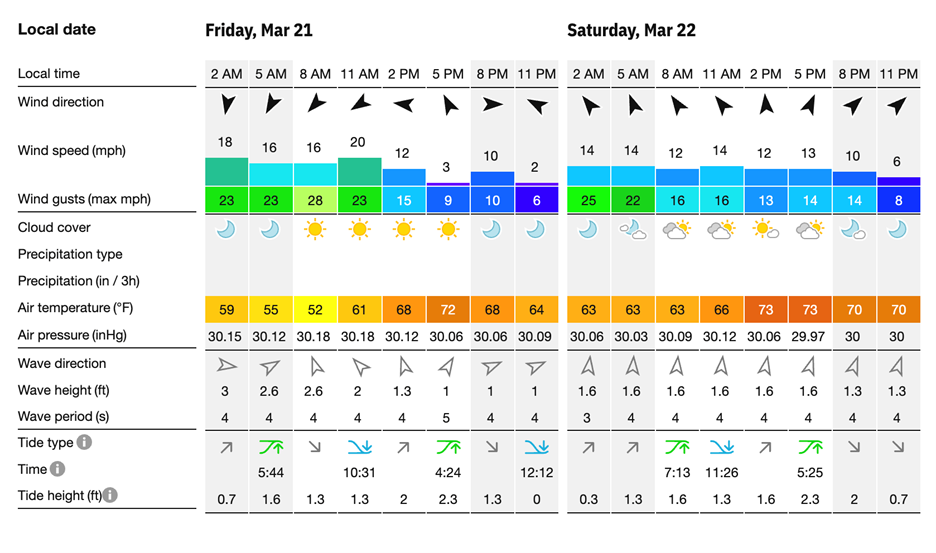
A scoring average over a quarter stroke above par should be expected, with a winning score of 10 to 14 under par. At least as it stands now, I’ve ramped up my weights on difficult and windy scoring conditions, and once again, Innisbrook will sneakily play as one of the toughest golf courses on the PGA Tour.
In terms of the course itself, Innisbrook is unique in the sense that it features five par threes and four par fives. All five of the par threes measure over 190 yards and play long and difficult. This explains why over 50% of all approach shots come from over 175 yards, and middle to long iron play still remains the easiest roadmap to success at Innisbrook. Last year, the par threes played as the fifth-toughest set of one-shotters on the PGA Tour, and navigating these holes around even par is a huge victory. The par fours are no pushover either, as none even play below 380 yards, while the par fives provide the only respite, ranking as the four easiest holes on the course.
If I was to encapsulate what makes Innisbrook so challenging, the Larry Packard design is a placement course where the second shot is long. It’s not a golf course that can be over-powered off the tee, nor is it a golf course where players can take less than driver off the tee and still expect a bunch of wedges in. This yields a complex decision matrix off the tee. Innisbrook might be the only club-down, long-iron-intensive course on the PGA Tour! For this reason alone, it should be celebrated, as it has found the incredibly narrow of pathway of testing accuracy and long-iron play in the same week. Usually long iron play goes hand in hand with distance and is only tested on extremely long golf courses! The Larry Packard design is not a traditional Florida course either, and it fits far more of a Carolina aesthetic. The last three Florida courses we have seen all feature a tremendous amount of water and all rank top-10 in penalty strokes per round. On the contrary, Innisbrook is far more in the vein of a strategic, death by 1,000 paper cuts course a la East Lake, or a longer version of Sedgefield. Let’s dive into the stats.
Stats
Off the Tee
Driving distance at Innisbrook is only 279 yards, 13.3 yards below Tour average, with a driving accuracy of 53.3%, 5.4% below Tour average. The Packard design features some of the most narrow fairways on the Tour, measuring just 27 yards wide.
Last year, Innisbrook ranked second in strokes gained off the tee difficulty, and every single year in the past decade, it has ranked as one of the six most difficult driving courses on Tour. Each of the last five years, accuracy has been more correlated with success at Innisbrook than distance, especially the last two years where it has played very challenging and firm. It features one of the lowest driver usage percentages on Tour as well, which explains the low driving distance. Players still struggle immensely to hit fairways at this course even when they club down. Many of the golf holes are incredibly claustrophobic and curve around bunkers. It’s a very difficult golf course to bomb and gauge, and most players take their medicine and club down off the tee. It’s not as if the missed fairway penalty is anything crazy, but the rough is generally thick enough that there is a real advantage for hitting the fairway, and I would still absolutely value accuracy over distance at this course seven days a week and twice on Sunday. Last year, only three of the top 11 players ranked top-20 in distance (Malnati, Young, Xander), while six ranked top-20 in accuracy. Even Cameron Young last year ranked higher in accuracy than he did in distance. Innisbrook is a pure accuracy over distance golf course, and I do believe there is a real edge for being an accurate driver of the ball at Innisbrook, even if it’s borderline impossible to hit fairways with a driver. Still, the most accurate players in this field are Paul Peterson, Tom Kim, Ben Kohles, Aaron Rai, and Corey Conners.
The only reason I’m not going higher on off-the-tee play in general is that you could probably make the argument that the fairways are so narrow, that skill is almost de-valued because it becomes such a crapshoot in firm conditions. Mackenzie Hughes finished top-three last year ranking nearly dead last in off-the-tee play, and Peter Malnati is one of the worst drivers of the ball on Tour. Ultimately, I have a standard weight on recent off-the-tee play, pure accuracy, and strokes gained off the tee on club-down courses with difficult to hit fairways. Again, this golf course makes zero sense. It’s impossible to hit fairways, and only terrible drivers play well here!
Approach
The greens-in-regulation percentage at Innisbrook last year was only 56.9%, 9.0% below Tour average, and it always features among the toughest greens to hit on the PGA Tour. Last year, Innisbrook ranked 10th in strokes gained approach difficulty, and it generally ranks on the harder side in this category, but it is still tougher to separate off the tee here than it is on approach.
Proximity
Distance | Shot Frequency | Tour Average |
Inside 100 Yards | 7.3% | 9.0% |
100-125 Yards | 8.6% | 10.3% |
125-150 Yards | 15.2% | 17.0% |
150-175 Yards | 16.4% | 22% |
175-200 Yards | 20.6% | 17.5% |
200 Yards-Plus | 31.9% | 25.9% |
The five par three and four par fives explain the long-iron-intensive nature at Innisbrook, and this remains an extremely valuable skill for players to have in their arsenal. The best long-term players in this field from 175 yards-plus are Kurt Kitayama, Michael Thorbjornsen, Lucas Glover, Nicolai Hojgaard, and Viktor Hovland.
Still, none of the last four champions of the Valspar have been elite approach players. In fact, approach play might be the weakest aspect of Sam Burns, Taylor Moore, and Peter Malnati’s game. What?! And historically, this has been far more of a spike putting course than it has been a spike approach course, in terms of the roadmap to victory. I went all in on middle- to long-iron play last year because that’s what made sense and got crushed. Just more evidence that this golf course makes zero sense, and I suppose I’ve settled on a standard weight in approach play, even though it logically should matter more here.
Around the Green
Last year, Innisbrook ranked 27th out 43 courses in strokes gained around the green difficulty, and it historically ranks towards the back end in this category. While short game is certainly important at Innisbrook due to the low greens-in-regulation percentage, the degree of difficulty of the actual shots at the Larry Packard design is quite low compared to other Tour venues.
Last year, it ranked 41st out of 43 courses from the fairway, 19th from the rough, and 19th from the bunkers. Still, based on the sheer volume of short game shots required on a course with such a low greens-in-regulation percentage, players with an elite short game can yield a significant edge here. I have a standard weight on around-the-green play this week, as short game has played just as much of a role in the strokes gained pie as strokes gained off the tee among winners, top-five, top-10, and top-20 finishers.
Putting
Last year, Innisbrook ranked 23rd out of 43 courses in strokes gained putting difficulty, and it generally ranks middle of the pack in this category. It ranked 28th inside five feet, 29th from five to 15 feet, and 17th from greater than 15 feet.
Innisbrook is a very confusing golf course to handicap in the sense that despite the fact that it features a very low greens-in-regulation percentage, putting has actually played a bigger role in the strokes gained pie than approach play amongst winners, top-five finishers, top-10 finishers, and top-20 finishers. This is almost never the case on difficult tee-to-green golf courses with a low greens-in-regulation percentage. I have a few theories on why Innisbrook might be the exception to the rule. Hitting fairways on this course is such a crapshoot with the firm and windy conditions and the lack of necessity to hit driver.
Yet still, on a golf course with five difficult par threes, spike putting playing a larger role than spike approach play on the outcome of this tournament is surprising, to say the least. Still, I’ll always follow the numbers, and it has been proven time and again, that even on a course that is so challenging from tee to green, players can win this event on the strength of their putter. In fact, this remains the largest through-line between Mackenzie Hughes, Peter Malnati, Taylor Moore, and Sam Burns, and I would at least put a field average on weight on putting, both from five to 15 feet, and on Bermuda over-seeded greens.
Scoring Stats
As has been the case for the past month, I will absolutely looking to identify the Florida specialists. The best players in this field in Florida over the last five years have been Corey Conners, Shane Lowry, Viktor Hovland, Justin Thomas, and Jordan Spieth.
As of now, steady winds north of 10 mph will be the norm this week, with gusts approach 25 to 30 mph. The best players in windy to extremely windy conditions over the last two years have been Xander Schauffele, Adam Scott, Justin Thomas, Viktor Hovland, and Aaron Rai.
It may not get talked about in the same grouping of Muirfield Village or Bay Hill, but Innisbrook is close to as hard as it gets for a PGA Tour course, and I will absolutely be looking for great scramblers and players who have shown their mettle in tougher, firmer, windier conditions. The best players over the last three years in difficult scoring conditions have been Xander Schauffele, Tommy Fleetwood, Shane Lowry, Viktor Hovland, and Corey Conners.
Comp Courses/Course History
Despite the fact that four of the last six Valspar events have been won by the same two players, Innisbrook is not a golf course that features a tremendously high correlation of course history. Once again, this is surprising to me, as it is a golf course with very little putting or hazard variance, and it heavily emphasizes tee-to-green skill. I suppose there isn’t a ton of nuance or difficulty to these green complexes, but the Packard design does feature a fair amount of strategy off the tee. Last year, Cameron Young and Chandler Phillips finished second and third on debut. The best players in the field at Innisbrook have been Sam Burns, Tommy Fleetwood, Jordan Spieth, Xander Schauffele, and Adam Hadwin.
There are five comparative courses that stand alone as the strongest reference points for Innisbrook:
East Lake: Outside of the over-seed at Innisbrook, this golf course comes the closest to Innisbrook in terms of emphasizing accuracy off the tee over distance as well as middle- to long-iron play.
Sedgefield: Very similar aesthetically and architecturally to Innisbrook, just with fewer long irons. Maybe the most similar of the entire group outside of East Lake.
TPC Sawgrass: Positional, windy, less-than-driver strategic golf course off the tee where scoring on the par fives is essential.
Harbour Town: Extremely claustrophobic, positional, Carolina-style less-than-driver golf course with small greens. Generally plays easier and softer than Valspar with far less long irons though.
TPC Southwind: A lot more water in play, but difficult fairways to hit, firm greens. Especially when we get wind, this is a very similar test.
The best players at these comparative courses have been Daniel Berger, Xander Schauffele, Justin Thomas, Viktor Hovland, and Billy Horschel.
Model
Off the Tee (17%) (PGA Tour average: 18%)
L36 Strokes Gained Off the Tee (6%)
L50 Distance to the Edge of Fairway (7%)
L3 Years Strokes Gained Off the Tee, Difficult to Hit Fairways (4%)
Approach (29%) (PGA Tour average: 28%)
L36 Strokes Gained Approach (13%)
L75 Proximity 175-200 yards (6%)
L75 Proximity 200 yards plus (10%)
Around the Green (10%) (PGA Tour average: 10%)
L50 Strokes Gained Around the Green Baseline (10%)
Putting (17%) (PGA Tour average: 15%)
L3 Years Strokes Gained Putting: Poa Trivialis (5%)
L50 Putting 5-10 feet (6%)
L50 Putting 10-15 feet (6%)
Scoring Stats (12%) (PGA Tour average: 14%)
L5 Years Strokes Gained Total: Florida (3%)
L2 Years Strokes Gained Total: 10+ mph Windy Conditions (4%)
L3 Years Strokes Gained Total: Difficult Scoring Conditions (5%)
Course History/Comp Courses (15%) (PGA Tour average: 15%)
L24 Innisbrook (6%)
L50 Comp Courses (TPC Sawgrass/Harbor Town/TPC Southwind/Sedgefield/East Lake) (9%)
Model Top 20
Xander Schauffele
Tommy Fleetwood
Justin Thomas
Adam Scott
Shane Lowry
Daniel Berger
Sepp Straka
Aaron Rai
Doug Ghim
Lucas Glover
Viktor Hovland
J.T. Poston
Rico Hoey
Sam Burns
Adam Svensson
Matt Kuchar
Ben Griffin
Michael Kim
Corey Conners
Bud Cauley
Player Profile: Daniel Berger
On a week where I would accept all different types of statistical arguments, riding with my guys still feels the most natural approach. I’ve been on Daniel Berger quite a bit this season, and while he has been an incredibly profitable top-20 bet, he has yet to break through with a victory. Innisbrook is another golf course that should fit his eye well. It’s not entirely dissimilar from TPC Sawgrass off the tee, and it may even have more in common with TPC Southwind, where Berger has two victories. He continues to drive the ball incredibly straight, and while his approach play faltered down the stretch at the Players, Berger has now finished top-25 in all three Florida swing events, while he continues to gain more confidence with the putter.


