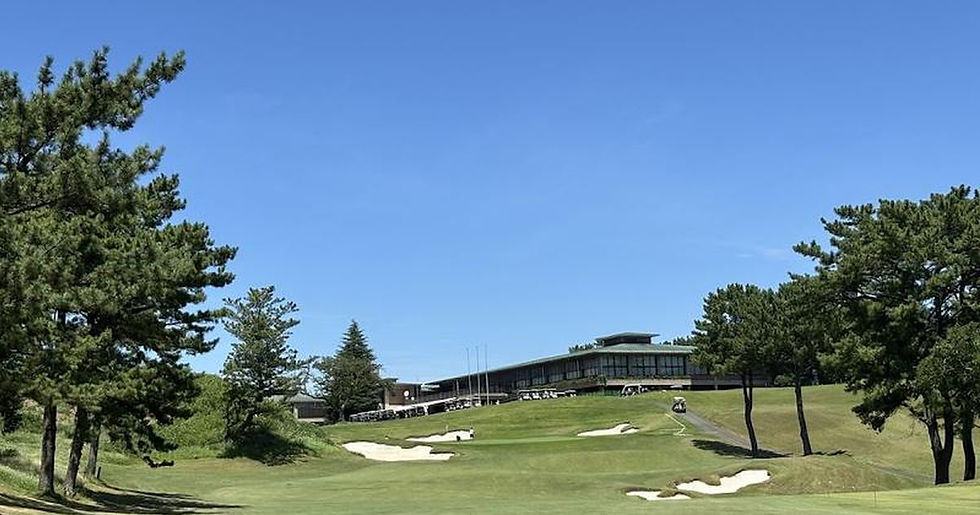
2025 Sony Open Course Preview

While I was thoroughly excited for last week’s Sentry tournament, it pales in comparison to how I feel about the Sony Open from a betting and fantasy perspective. Call me old-fashioned, but I’m a sucker for a full-field event with a cut, which is exactly what we have on our hands this week. It also helps that this tournament has been kind to me over the years. Three years ago, I won the Pat Mayo Experience Open and finished second in the $33 Single Entry. I was still in my early stages of playing DFS, and I only invested $78 into that event as I was going to be on a golf trip and disengaged. I barely even got to sweat it, but turning $78 into over $7K remains one of the best ROI weeks of my DFS career. The following year, I hit Si Woo Kim at 60/1. Last year, I had a Keegan Bradley outright and Byeong-Hun An in One and Done and DFS, and I walked away with the worst possible outcome. I feel incredibly comfortable with my breakdown of this golf course, and I’m not sure if that has anything to do with the fact that it was designed by my favorite architect (Seth Raynor), but I always look forward to this week. Hopefully we can keep the momentum going after a strong first week in Maui.
Former Winners
2024: Grayson Murray (-17) over Keegan Bradley, Byeong-Hun An (-17) (Playoff)
Winner Odds: Murray (400/1)
Scoring Average: -1.31
2023: Si Woo Kim (-18) over Hayden Buckley (-17)
Winner Odds: Kim (50/1)
Scoring Average: -1.34
2022: Hideki Matsuyama (-23) over Russell Henley (-23) (Playoff)
Winner Odds: Matsuyama (18/1)
Scoring Average: -2.08
2021: Kevin Na (-21) over Chris Kirk, Joaquin Niemann (-20)
Winner Odds: Na (65/1)
Scoring Average: -2.25
2020: Cameron Smith (-11) over Brendan Steele (-11) (Playoff)
Winner Odds: Smith (50/1)
Scoring Average: +0.15
The Basics
Course: Waialae Country Club
Location: Honolulu, Hawaii
Designer: Seth Raynor (1927), Tom Doak restoration (2017)
Par/Length: Par 70; 7,044 yards
Hazards: Water comes into play on five holes
Fairways: Bermuda-grass measuring 34 yards wide
Rough: Bermuda-grass measuring 3 inches
Greens: 7,100 square feet, featuring TifDwarf Bermuda-grass
Golf Course
Waialae Country Club is a wonderfully nostalgic, Golden Age design from the superb Seth Raynor. Unfortunately, as is the case with many Golden Age treasures, advances in modern technology have compromised the shot values of a true American classic. Tom Doak was brought in a few years ago for a restoration, which ultimately had very little impact on how the course plays for professionals. Wind can always play a factor (it certainly will this year), but under tranquil conditions, Waialae is one of 10 shortest and easiest golf courses on Tour.
The past two years, we have seen a touch more wind, and it has played as the 15th-easiest course on Tour, as opposed to the fifth easiest course in 2022 and 2021. In 2020, we saw an insane amount of wind and it played as the eighth-toughest course on Tour. Early forecasts show similar conditions to 2020, with consistent wind speeds in the 20-mph zone. It’s still early, and I will update my thoughts on the weather in all of my content throughout the week. I’m dubious to suggest that this will play as one of the 10 toughest courses on Tour again, but I feel comfortable supposing this event will be won in the 15 under zone, as opposed to the 17 to 23 under zone of years past.
So how does the wind affect our breakdown? Based on the current focus (I’ll re-run my model after the Sentry on Monday or Tuesday), I have decreased my normal emphasis on putting in exchange for a higher weight on driving and short game than I typically have at Waialae. More difficult scoring conditions will yield a lower greens-in-regulation percentage and place more pressure on a player’s tee-to-green skill, somewhat mitigating their ability to separate on the greens.
In terms of the actual layout, Waialae is a standard par 70 featuring four par threes, 12 par fours, and two “par fives.” The par fives rank as the easiest set of three-shotters on the PGA Tour, yielding a birdie or better percentage of 64.6%, compared to the Tour average of 45.2%. In totality, the par threes provide the most pushback. All four play between 176 and 204 yards and rank as the third, fourth, 12th and 14th-toughest holes of the course. Of the 12 par fours, nine out of the 12 play under 460 yards. The only true long par fours are the first and the 13th, which play as the two toughest holes on the golf course. The fact that nine par fours measure between 350 and 460 yards also explains why this event is nearly always won by the player who presents the best combination of mid- to short-iron play and putting inside 15 feet. Let’s dive into the stats.
Stats
Off the Tee (13%)
Driving distance at Waialae last year was 291.6 compared to the PGA Tour average of 290.8. Driving accuracy at Waialae was 56.8% compared to the Tour average of 60.4%. Despite featuring the 10th-widest fairways on Tour, Waialae ranks below average in driving accuracy, proving that players swing away with driver far more often than in years past.
Driver usage hangs at 64.8% compared to the Tour average of 67.3%, so it is still somewhat of a positional golf course, but not as much as you’d think. Waialae is a great example of a course that we used to think of a less-than-driver course, but advances in modern technology and advanced analytics have allowed players to realize that a more aggressive strategy is optimal. However, the driver usage shrank significantly in the windy 2020 event, so the windier it gets, the more challenging and strategic of a golf course this becomes.
Last year, Waialae ranked 23rd out of 45 courses in strokes gained off the tee difficulty, and it generally ranks middle of the pack in this category. It ranked 29th out of 43 courses in missed fairway penalty, 17th in rough penalty, 41st in non-rough penalty, and 20th in fraction of missed fairways that result in a penalty stroke.
The Bermuda rough certainly gives players something to think about, but the more strategically sound player should not be deterred from hitting driver. There’s not a whole lot of benefit from clubbing down here, and the value in being an elite total driver of the ball has become more prominent in recent years at the Sony Open.
Last year, there was a nearly equal correlation between distance and accuracy, and I would argue great total driving at Waialae triumphs either elite distance or elite accuracy. Grayson Murray ranked second in this field off the tee last year, ranking top-25 in both distance and accuracy. Byeong-Hun An also lost in a playoff while leading the field in off-the-tee play and driving distance, while ranking top-35 in accuracy.
While there are plenty of historical examples of shorter players having success here, I think with advancements in modern technology, Waialae is turning more into a golf course where you can gain a significant advantage with elite total driving, and especially in a windier year, I am valuing total driving far more than I have in year’s past. The best total drivers in this field are Luke Clanton, Luke List, Austin Eckroat, Rico Hoey, and Kurt Kitayama.
Approach (29%)
Last year, greens in regulation percentage at Waialae was 69.1%, 3.1% above Tour average. It ranked 27th out of 43 courses in approach difficulty, and it generally ranks middle of the pack to on the easier end in approach difficulty. Waialae is not a golf course where players will face very many long irons, and it is an easier approach course than it is a driving course.
Proximity
Distance | Shot Frequency | Tour Average |
Inside 100 Yards | 5.9% | 9.0% |
100-125 Yards | 7.5% | 10.3% |
125-150 Yards | 19.7% | 17.0% |
150-175 Yards | 27.5% | 22% |
175-200 Yards | 21.7% | 17.5% |
200 Yards-Plus | 17.7% | 25.9% |
Waialae is the exact inverse of Kapalua in the sense that close to 70% of all approach shots come from between 125 and 200 yards, whereas Kapalua saw the vast majority of approaches coming from either inside 125 yards or over 175 yards. Waialae, like other par 70 courses such as Harbour Town, Colonial and Sedgefield, is a pure middle-iron test. The best long-term middle-iron players in this field have been Kurt Kitayama, Joel Dahmen, Emiliano Grillo, Keegan Bradley, and Lucas Glover.
Around the Green (8%)
Last year, Waialae ranked 37th out of 43 courses in around-the-green difficulty, and it generally ranks as one of the easiest short game courses on Tour. It ranked 29th out of 43 courses in around-the-green difficulty from the fairway, 18th from the rough, and 43rd out of 43 courses from the bunkers. Thus, Waialae features some of the easiest greenside bunkers on Tour.
Still, with a greens-in-regulation percentage under 70%, I have a standard weight on around-the-green play this week, which oddly shoots up in prominence on the Data Golf radar plot. While this is somewhat surprising to me given the low degree of difficulty around the green, I still expect this golf course to play harder and feature a lower greens-in-regulation percentage than in years past. Even last year, every single one of the top six players on the leaderboard ranked top-25 in strokes gained around the green, which is not something we see every week. Under more difficult scoring conditions this week, I’ve bumped up to a standard weight on around the green play.
The best around-the-green players over the last year on Bermuda courses have been Mackenzie Hughes, Christiaan Bezuidenhout, Russell Henley, Aaron Baddeley, and Eric Cole.
Putting (18%)
Last year, Waialae ranked 22nd out of 43 courses in putting difficulty, and it generally ranks middle of the pack in this category. The Raynor design ranked 11th out of 43 courses in putting difficulty inside five feet, 18th from five to 15 feet, and 33rd from greater than 15 feet. Yes, these are faster, grainier Bermuda greens than what we saw last week at Kapalua, but we are still in a tropical climate, and they do not run any faster than normal speed.
Historically, putting at Waialae has been more important than any of the other three strokes gained categories for winners, top-five finishers, top-10 finishers, and top-20 finishers, and while the Sony is not quite a pure putting contest like Kapalua, I still have a slightly above average weight on putting, even given slightly more difficult scoring conditions than the last four years.
Seth Raynor is a master at green undulations and subtleties, but conditions are never firm enough to truly test today's best. There's still a tremendous amount of value in identifying those who have putted well here before, as these are confidence greens. Former champion Kevin Na spoke to this, saying: “These greens roll great but the only difficult part is the grains are sometimes difficult to judge. You know, we've had a couple putts this week and not just myself, even my fellow playing partners, where it looks like it's going to do one thing and it doesn't. If you can just read these greens well, you're going to be really ahead of the field.” This speaks further to the importance of course experience but also those who excel on grainy Bermuda greens. The best Bermuda putters over the past three years have been Andrew Putnam, Ben Griffin, Brendon Todd, Harry Hall, and Maverick McNealy.
Scoring Stats (10%)
While we already have a hefty weight on the most specific comparative courses to Waialae, I cannot emphasize enough the importance of identifying those who raise their baseline on this style of shorter, par 70 golf course that heavily emphasizes middle iron play. The best short course players in this field over the last three years have been Eric Cole, Russell Henley, Denny McCarthy, Brian Harman, and Corey Conners.
One of my favorite tools at the Rabbit Hole is its course specific filters, and with the more laid-back atmosphere this week and susceptibility to wind, I wanted to identify the best players on “Island” golf courses over the last five years, who have been Ben Griffin, Alex Smalley, Vince Whaley, Chris Kirk, and Austin Eckroat.
Comp Courses/Course History (22%)
Surprisingly, Waialae features the eighth-most predictive course history on Tour, and there is something about the Seth Raynor design that rewards on repeat viewing. Mathieu Pavon was the only player to finish top-10 as a debutant last year, although Grayson Murray had just a missed cut in his only prior appearance. It has been very rare for first-timers to win here, and I have a far higher weight on course history than my average. The best players at Waialae over the past five to seven years have been Matt Kuchar, Chris Kirk, Corey Conners, Hideki Matsuyama, and Russell Henley.
There are so many golf courses that resemble Waialae, both in skill-set and agronomy, and many of these golf courses are accounted for in the short course section. Yet Colonial, Harbour Town, Port Royal, Sedgefield, and Sea Island rise above as the most noteworthy examples of other shorter par 70s that feature middling scoring conditions based on wind and heavily accentuate middle-iron play. It should not come as a surprise that many of the players who have succeeded at these golf courses have also found success at Waialae. The best players at Waialae’s strong list of comparative courses have been:
Russell Henley
Ben Griffin
Daniel Berger
Corey Conners
Seamus Power
Billy Horschel
Patrick Rodgers
Matt Kuchar
Eric Cole
Tom Kim
Model
Off the Tee (13%) (PGA Tour average: 18%)
L50 Total Driving (8%)
L50 SG: OTT Short Courses (5%)
Approach (29%) (PGA Tour average: 30%)
L50 SG: APP (12%)
L75 Proximity 125-150 yards (5%)
L75 Proximity 150-175 yards (7%)
L75 Proximity 175-200 yards (5%)
Around the Green (8%) (PGA Tour average: 8%)
L50 SG: ARG (4%)
LY SG: ARG Bermuda (4%)
Putting (18%) (PGA Tour average: 15%)
L3 Years SG: Putting Bermuda (8%)
L50 Putting 5-10 Ft (5%)
L50 Putting 10-15 Ft (5%)
Scoring Stats (10%) (PGA Tour average: 14%)
L3 Years SG: TOT Short Courses (6%)
L5 Years SG: TOT Island Courses (4%)
Comp Courses/Course History (22%) (PGA Tour average: 15%)
L24 SG: TOT Waialae (10%)
L50 SG: TOT Comp Course Model: Sedgefield, Colonial, Port Royal, Harbor Town, Sea Island (12%)
Model Top 20
Russell Henley
Ben Griffin
Corey Conners
Eric Cole
Brian Harman
Hideki Matsuyama
Seamus Power
Luke Clanton
Austin Eckroat
Adam Svensson
Billy Horschel
Keegan Bradley
Keith Mitchell
Chris Kirk
Byeong-Hun An
Daniel Berger
Matt Kuchar
J.T. Poston
Ryo Hisatsune
Tom Kim
Player Profile: Daniel Berger
Daniel Berger is firmly on my radar as a player in store for a big 2025, and Waialae is the perfect venue for the four-time PGA Tour winner to get back on track. We already saw some encouraging flashes during the Fall swing, and Berger ended his 2024 campaign with a runner-up finish at the RSM Classic, a very similar golf course to what he will see this week at Waialae. While Berger has not played this event since 2021, he has recorded three top-15 finishes in six appearances at Waialae and experienced a tremendous amount of success at other short, par 70 golf courses such as Colonial, Sea Island, Harbor Town, and TPC River Highlands, just to name a few. The biggest bugaboo with Berger last year was his putter, and more difficult conditions and a re-positioned emphasis on tee-to-green play in windy conditions at Waialae should play even more into the Florida native’s hands.