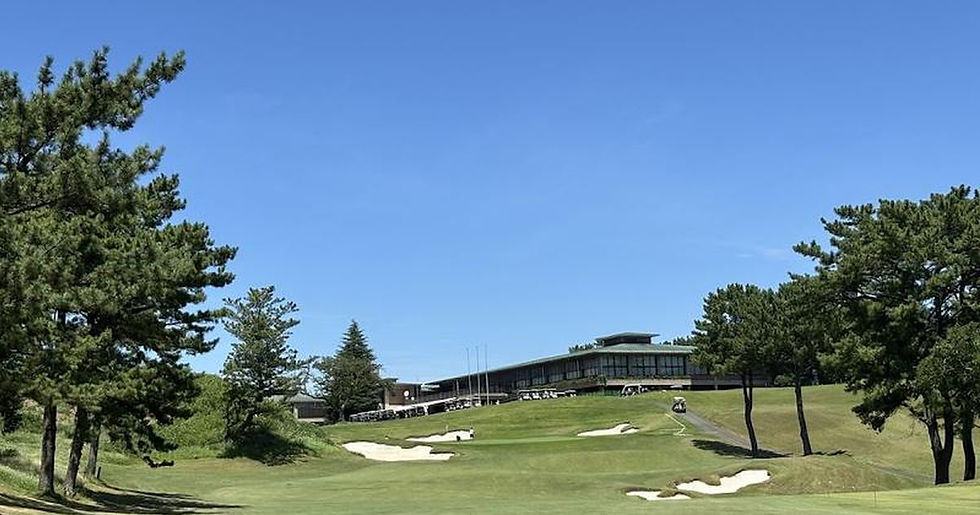
2025 American Express Course Preview

The PGA Tour heads to sunny Palm Springs for the American Express, the first stop in the West Coast swing. The event was previously five rounds of competition, known for its celebrity pro-am hosted by Bob Hope. In 2012, the event changed to a traditional 72-hole format across three different courses with a 54-hole cut, not dissimilar to the AT&T Pebble Pro-Am.
The tournament has been hosted at numerous courses in the Palm Springs area over the years before settling on the Stadium Course at PGA West, the Nicklaus Tournament Course (originally designed for the 1991 Ryder Cup), and La Quinta Country Club. This three-course rotation has been in existence since 2016, so I would not spend a ton of time deliberating over tournament results from prior to that year.
The event has surprisingly seen a bit of a resurgence in star power in recent years, although Scottie Scheffler (who had previously committed) will still be watching from the sidelines while he recovers from a hand injury. Still, Xander Schauffele, Patrick Cantlay, Justin Thomas, Sungjae Im, Sam Burns, Tom Kim, and Wyndham Clark will all be making the trip to the desert. None of these players will be making their season debut, and it’s worth noting that eight of the last nine champions of the American Express had played in either the Sony Open or Sentry Tournament of Champions. Nick Dunlap of course broke that trend last year, becoming the first amateur to win on the PGA Tour in 33 years. Yet success at those events is not necessarily a prerequisite. Only 50% of those eight winners recorded a top-10 finish during the Aloha swing. Similar to our evaluation at the Sony, be cautious of those making their first start of the year, but not overly critical of early-season performance.
Former Winners
2024: Nick Dunlap (-29) over Christiaan Bezuidenhout (-28)
Winner Odds: Dunlap (380/1)
Scoring Average
Stadium: -2.86
LQ: -4.1
NTC: -3.9
2023: Jon Rahm (-27) over Davis Thompson (-26)
Winner Odds: Rahm (+650)
Scoring Average
Stadium: -2.74
LQ: -2.42
NTC: -3.28
2022: Hudson Swafford (-23) over Tom Hoge (-21)
Winner Odds: Swafford (220/1)
Scoring Average
Stadium: -1.46
LQ: -2.08
NTC: -1.74
2021: Si Woo Kim (-23) over Patrick Cantlay (-22)
Winner Odds: Kim (60/1)
Scoring Average
Stadium: -1.2
NTC: -1.05
2020: Andrew Landry (-26) over Abraham Ancer (-24)
Winner Odds: Landry (200/1)
Scoring Average
Stadium: -1.64
LQ: -2.83
NTC: -2.77
Five-Year Averages
Stadium: -1.98 (Between -2.86 & -1.2)
LQ: -2.86 (Between -4.1 & -2.08)
NTC: -2.55 (Between -3.9 & -1.05)
The Basics
Course: PGA West Stadium Course
Location: Palm Springs, California
Designer: Pete Dye, 1986 (2024 green & bunker renovation)
Par/Length: Par 72; 7,187 yards
Hazards: Water comes into play on 7 holes
Fairways: TifGreen Bermuda-grass with Rye-grass measuring 29 yards wide on average
Rough: TifGreen Bermuda-grass measuring 2 inches
Greens: 5,000 square feet featuring TifDwarf Bermuda-grass with Poa Trivialis over-seed running 11 on the stimp
Course: Jack Nicklaus Tournament Course
Location: Palm Springs, California
Designer: Jack Nicklaus, 1987
Par/Length: Par 72; 7,147 yards
Hazards: Water comes into play 5 holes
Fairways: Rye-grass
Rough: Forman Bermuda-grass measuring 2 inches
Greens: 7,000 square feet featuring TifEagle Bermuda-grass with Poa Trivialis overseed running 10.5 on the stimp
Course: La Quinta Country Club
Location: La Quinta, California
Designer: Lawrence Hughes with Pascuzzo re-design in 1999
Par/Length: Par 72; 7,060 yards
Hazards: Water comes into play on 7 holes
Fairways: Bermuda-grass
Rough: Bermuda-grass, 1.75 inches
Greens: 4,773 square feet Poa Trivialis with Rye-grass overseed running 11.5 on the stimp
Golf Course
The 156 players will rotate across the first three courses during rounds 1-3, and those who make the cut will play their final round at the Pete Dye Stadium Course. Thus, the Stadium Course will see the double the attention of the Nicklaus Tournament Course and La Quinta Country Club. Luckily for us, these three courses are extremely similar in terms of the questions they are posing. For the purposes of this breakdown, I will be focusing primarily on the PGA West Stadium Course, as it is receiving double the play of the other courses, including the final round.
As I was on my second evacuation of the week last night, our wonderful Steve Schirmer alerted me to a Larry Bohannan article reporting that the Stadium Course will feature new greens for the 2025 event. While the changes will likely have a negligible effect on play, this is why Steve is the best, and we will certainly be the first site to acknowledge and report this. In terms of the actual changes, Tim Liddy, an architect who worked closely in the 1980s with Pete Dye, returned to restore the golf course to the architect’s original intent, which was certainly more of a challenge than the birdie bonanza we have grown accustomed to over the past 25 years. This includes the greens returning to their original size with the opportunity for new pin positions, and flat-bottomed bunkers around those greens rather than the concave shape that had been acquired through four decades. While I am often dubious that these changes will have an actual impact on scoring (remember, TPC River Highlands made an attempt to restore their Pete Dye golf course ahead of last year’s Travelers Championship and it had virtually zero impact on scoring), the greens will undeniably be firmer. Just think back to the firmness of Colonial’s new greens last year. It takes years for greens to settle, and the Stadium Course will at least play a little bit harder in comparison to the other two golf courses, which remain unchanged. If anything, my advice would be to not even remotely screw around with targeting Stadium Course players for showdown. Prior to the changes, it already played at least 0.5 strokes harder than both courses, and the difference will only increase this year. In terms of our breakdown of the Stadium Course, I would place an even further increase on the importance of approach play (and even bunker play!), on a golf course that is already sneakily more of a second-shot golf course than it is a putting contest. Let’s dive in.
Stats
Off the Tee (9%)
Last year, driving distance at the Stadium Course was 289.7, 2.6 yards below Tour average, and driving accuracy was 63.2%, 4.5% above Tour average, with fairways measuring 34.8 yards wide, slightly above Tour average. Last year, PGA West ranked 27th out of 43 courses in strokes gained off the tee difficulty, and it has been trending easier and easier off the tee. I would not expect that to change anytime soon with players realizing an aggressive strategy is optimal.
Similar to Waialae, over the last two years, this has become FAR more of a driver-heavy golf course, largely due to ranking 31st out of 43 courses in missed fairway penalty, 35th out of 43 courses in rough penalty and 35th in non-rough penalty. For all the hazards in play, there is barely any difference between missing the fairway and the rough and it is no longer enough to deter players from hitting driver. The difference between accuracy here and distance is negligible, and it’s hard to yield a tremendous advantage with elite driving. Both Dunlap and Bezuidenhout finished 1st and 2nd here losing strokes OTT, and neither are elite drivers of the ball. Hudson Swafford lost strokes OTT, and only two players in the top 13 last year ranked top-25 in driving accuracy. I suppose as this continues to trend in the direction of being more driver-heavy, I would rather a player have distance over accuracy, but this should only be viewed as a luxury on this course that is so easy off the tee. The true way to separate at the AmEx is via elite overall approach play and putting.
Approach (28%)
Last year, greens-in-regulation percentage at the Stadium Course was 73.2%, ranking as the seventh-easiest greens to hit on Tour. It ranked 33rd out of 43 courses in approach difficulty, yet as much we want to think of this event as a putting contest, approach has actually been far more impactful in the strokes gained breakdown of winners, top-10 finishers, and top-20 finishers. If anything, new greens are always firm and take a few years to settle. I would expect even a slightly lower greens-in-regulation percentage at the Stadium Course this week and an even further emphasis on approach play.
Proximity
Distance | Shot Frequency | Tour Average |
Inside 100 Yards | 13.6% | 9.0% |
100-125 Yards | 12.1% | 10.3% |
125-150 Yards | 12.3% | 17.0% |
150-175 Yards | 21.7% | 22% |
175-200 Yards | 12.0% | 17.5% |
200 Yards-Plus | 28.2% | 25.9% |
In terms of proximity buckets, the Stadium Course features a fairly even distribution, and I would prefer to focus on overall recent approach play above any single proximity bucket. Since each golf course features four reachable par fives and a long par three, players will certainly have a few high-leverage long irons, but they will also be tasked with the importance of wedge play.
The Stadium Course is also a golf course that significantly rewards aggressive play. Outside of the four reachable par fives, the optimal strategy is also to attack the par fours given the low missed fairway penalty. One of my favorite stats on the Rabbit Hole is going for the green birdie or better percentage, which measures the birdie or better percentage of players when attempting to drive a par four or reach a par five in two strokes. Given the fact that player should be going for it as often as possible, identifying the best converters of aggressive play will be highly valuable. The best players in this stat category over the last year have been Sungjae Im, Eric Cole, Davis Thompson, Harry Hall, and Chad Ramey.
Around the Green (5%)
Last year, the Stadium Course ranked 22nd out of 43 courses in around-the-green difficulty, and it generally ranks as one of the easiest courses on Tour in this category. The Data Golf radar plot certainly favors around-the-green play, which makes very little sense to me given the degree of difficulty on the short game shots outside of the cavernous bunkers. Winners have only gained 0.2 on average strokes around the green, compared to nearly six on approach and four putting. It’s hard to make an argument that short game plays a significant role in the outcome of this tournament, as the last five winners have all ranked outside the top 15 in around-the-green play. With that said, one of the goals of the renovation was to restore the bunkers to the challenging hazards that they were in the original design concept, and prior to the renovation, they already ranked as the hardest bunkers on the PGA Tour. The challenge of the Stadium Course bunkers alone merit a peek at sand save percentage, and the best long-term bunker players in this field are Billy Horschel, Eric Cole, Beau Hossler, Taylor Moore, and Sam Burns.
Putting (19%)
Last year, the Stadium Course ranked 42nd out of 43 courses in strokes gained putting difficulty, and each of the last three years, it has ranked as the second-easiest putting course on Tour. There is nothing interesting at all about these greens, and while I am optimistic that the renovation, which included green expansion, should open up more pin positions, I’m still going to need to see it to believe it.
Last year, the Stadium Course ranked 36th out of 43 courses in putting inside five feet, 42nd from 5 to 15 feet, and 42nd from greater than 15 feet, so not only is this golf course just insanely easy to make putts on, I was surprised to see that on what I would think is a pure putting contest, approach play has played far more of a role in determining our champion. Last year, however, Dunlap ranked 11th in putting and 19th in APP play. In 2023, Rahm ranked 7th in APP play and 61st in putting; in 2022, Swafford ranked 4th in APP play and 2nd in putting, and in 2021 Si Woo Kim ranked 2nd in APP play and 8th in putting. All in all, a strong combination of the two remains the most logical pathway to success here, but in terms of the breakdowns of victors, Kapalua is far more of a pure putting contest than American Express.
Putting on any of these courses is still extremely important, but only due to sheer volume, and this over-seeded Bermuda rolls incredibly true. Players will still need to separate from five to 15 feet, and the best players in this field from this range have been Andrew Putnam, Chris Gotterup, Nate Lashley, Erik Van Rooyen, and Peter Malnati.
Scoring Stats (23%)
Just to get even more weight down on scoring, I will also be looking to identify players who raise their baseline in extremely easy scoring conditions. This served us well at Kapalua, and the American Express will feature similarly benign conditions. The players who gain the most strokes per round in extremely easy conditions are J.T. Poston, Sungjae Im, Tom Kim, Ben Griffin, and Eric Cole.
Last year, the Stadium Course played as the 3rd-easiest course on the PGA Tour, and each of the last three years, it has ranked inside the top 10 in this category. Don't get it twisted; there is trouble at every turn on the Stadium Course, similar to other hazardous courses such as TPC Twin Cities, TPC Sawgrass, and PGA National. Last year, the Stadium Course ranked third out of 45 courses in penalty strokes per round, and the prior year, it ranked first. Yet still, it played as one of the easiest courses on Tour. This is what we would call a high-variance golf course. Birdies are available, but there are bogeys at every turn as well. Over the last five years, only five courses feature over 0.5 penalty strokes per round and a scoring average of at least a stroke under par:
PGA West Stadium Course
Albany Golf Club
TPC Twin Cities
Austin Country Club
Vidanta Vallarta
Black Desert
The name of the game at these golf courses is keeping one’s foot on the gas while still avoiding all the landmines. The best players in this field on water-heavy courses over the last three years have been Tony Finau, Wyndham Clark, Sungjae Im, Sam Burns, Emiliano Grillo, and Si Woo Kim.
Comp Courses/Course History (16%)
All three courses in the American Express rotation feature some of the absolute lowest correlation between course and success, and last year, Nick Dunlap won on his first appearance. These are pure, driving range, point-and-shoot golf courses. There is not a breath of nuance to any of the design. The Stadium Course features typical Pete Dye visual intimidation, and La Quinta and the Nicklaus Tournament Course are even more banal. I would not penalize any player for a lack of experience at this event, but of course, there are certain players (Adam Hadwin!) who seem to find considerable success year after year. The best players in this field at the American Express have been Adam Hadwin, Sungjae Im, Patrick Cantlay, Sam Burns, and Davis Thompson.
In terms of comparative courses, there are certainly a few that have already been covered in the water-heavy, desert, and TPC buckets but that deserve an extra shout. TPC Sawgrass is obviously the East Coast realization of Pete Dye’s stadium style, penal magnum opus. PGA West was modeled after TPC Sawgrass, and while the host of the Players Championship has certainly aged better, maybe that changes with the new greens and bunkers? TPC Scottsdale and TPC Summerlin are similarly both desert, TPC courses that reward aggressive play, and there has been a ton of crossover across both leaderboards. TPC Twin Cities is also another water heavy, flat, TPC-style course that poses incredibly similar questions to the Stadium Course. The best players at these comp courses are as follows:
Justin Thomas
Xander Schauffele
Tony Finau
Sungjae Im
Patrick Cantlay
Jason Day
Doug Ghim
Tom Kim
Adam Hadwin
Tom Hoge
Model
Off the Tee (9%) (PGA Tour average: 18%)
L50 Rounds Strokes Gained Off the Tee (9%)
Approach (28%) (PGA Tour average: 30%)
L36 Rounds Strokes Gained Approach (14%)
L75 Rounds Inside 100 yards (4%)
L75 Rounds 200 yards-plus (6%)
L50 Rounds Going for the Green BoB% (4%)
Around the Green (5%) (PGA Tour average: 8%)
L50 Rounds Sand Save Percentage (5%)
Putting (19%) (PGA Tour average: 15%)
L3 Years Strokes Gained Putting: Bermuda Over-seeded Greens (7%)
L50 Rounds Putting 5-10 Feet (6%)
L50 Rounds Putting 10-15 Feet (6%)
Scoring Stats (23%) (PGA Tour average: 14%)
L3 Years Strokes Gained Total: Easy Scoring Conditions (8%)
L50 Rounds Birdies or Better Gained (6%)
L5 Years Desert Golf Courses (3%)
L3 Years TPC Courses (3%)
L5 Years Water Heavy Courses (3%)
Comp Courses/Course History (16%) (PGA Tour average: 15%)
L24 Rounds American Express Courses (8%)
L24 Rounds Comp Courses: TPC Scottsdale, TPC Sawgrass, TPC Summerlin, TPC Twi Cities (8%)
Model Top 20
Xander Schauffele
Sungjae Im
Sam Burns
Eric Cole
Tom Kim
Patrick Cantlay
Tom Hoge
Tony Finau
Maverick McNealy
Ben Griffin
Doug Ghim
Brian Harman
Justin Thomas
J.T. Poston
Matti Schmid
Matt Kuchar
Keith Mitchell
Andrew Putnam
Davis Thompson
Jason Day
Player Profile: Sam Burns
Truth be told, I’m not a Sam Burns guy. I cannot remember the last time that I bet him, and it certainly did not happen in 2024. With that being said, this is the perfect golf course for him, and as my friend Kyle has been keen to point out, Burns’ game has been percolating for a number of months now. The four-time PGA Tour winner started off the season on a high note with an eighth-place finish at the Sentry, and he now returns to a golf course that he finished sixth at last year. My major concern is if his approach play can hold up under pressure, but Burns plays with a ton of aggressiveness off the tee and he remains one of the best overseeded Bermuda putters in the game.